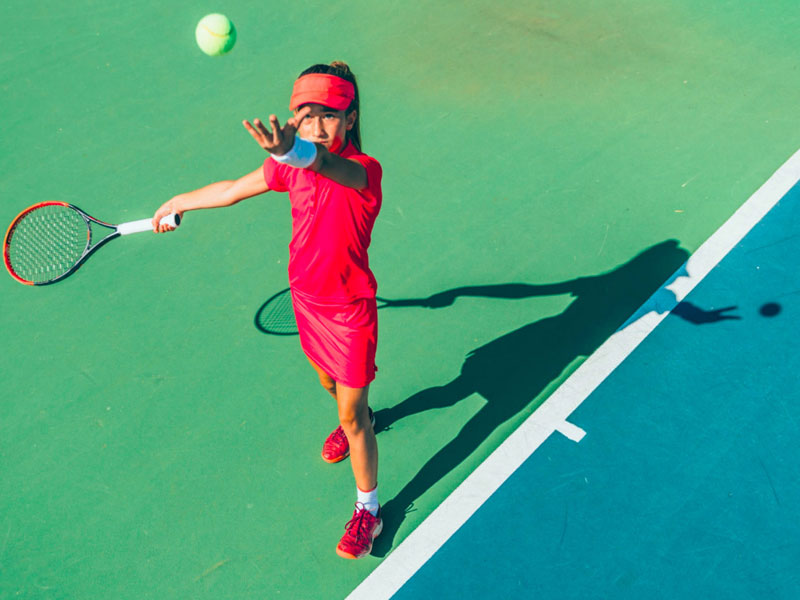
Watching the US Open can be more than an exciting way to follow the world’s best tennis players. For young athletes, it can also be an opportunity to learn.
Professional players demonstrate exceptional footwork, powerful groundstrokes, strategic serving, mental toughness, and sportsmanship throughout every match. Young players don’t need to copy professional athletes exactly. Instead, they can observe these skills and turn that inspiration into practical tennis drills for kids.
After watching a thrilling US Open match, grab a racket and head to the court. Here are five important tennis skills young players can practice.
1. Improve Footwork and Court Movement
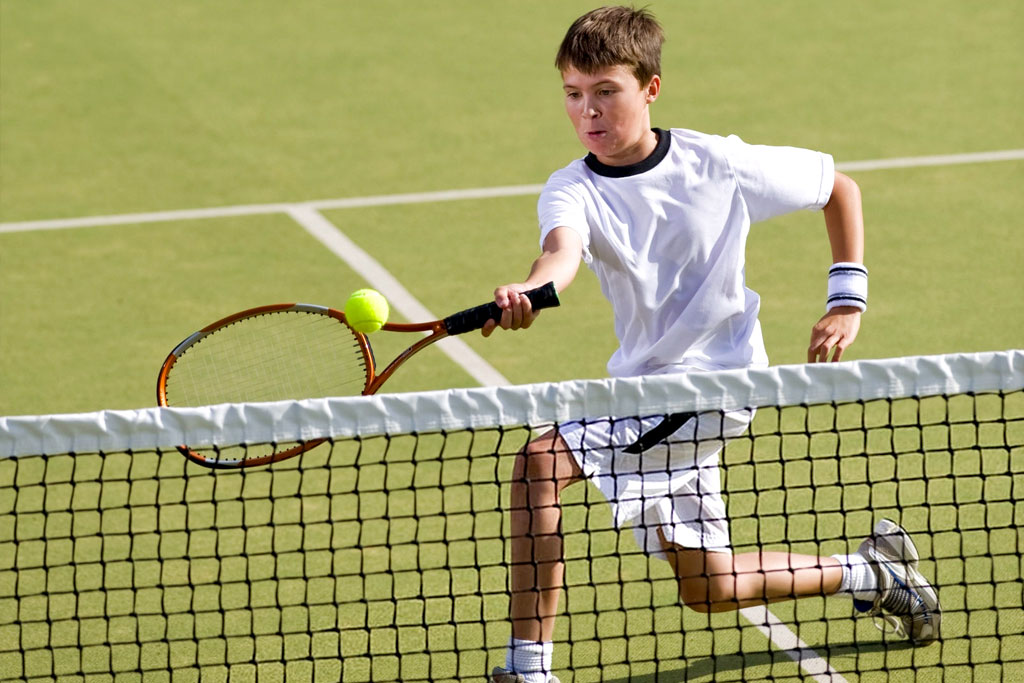
Watch a professional tennis match closely, and one thing becomes obvious: the players are rarely standing still.
They constantly adjust their position, take quick steps, move laterally, and recover after every shot. This efficient movement is a major part of successful tennis.
For young players, tennis footwork is just as important as learning how to swing the racket.
Why Footwork Matters
Good footwork helps players reach the ball while maintaining balance and control. It also allows them to recover quickly and prepare for the next shot.
Young players can practice:
- Side-to-side shuffles
- Forward and backward movement
- Split-step drills
- Cone exercises
- Shadow swings with footwork
- Recovery-to-center drills
The goal isn’t simply to move as fast as possible. Players should learn to move efficiently, stay balanced, and arrive in the right position before hitting the ball.
Try This Simple Footwork Drill
Place three markers across the baseline. Have the player start in the center, move toward one marker, return to the middle, and then move toward another.
Keep the drill short and energetic.
Good movement quality matters more than making the exercise exhausting.
2. Build More Consistent Groundstrokes
The US Open is filled with spectacular forehands and backhands, but professional players aren’t successful simply because they hit hard. They also know how to control the ball and maintain consistency.
This is an important lesson for young tennis players.
Focus on Control Before Power
Beginners sometimes assume that hitting the ball harder automatically makes them better players. In reality, a controlled shot that lands inside the court is often much more valuable than a powerful shot that goes long.
During tennis practice for kids, focus on:
- Watching the ball carefully
- Preparing the racket early
- Maintaining balance
- Using a smooth swing
- Finishing the stroke properly
- Aiming toward specific targets
Once consistency improves, players can gradually work on adding more pace.
Practice With Targets
Place cones or other safe targets on the opposite side of the court. Challenge players to direct their forehands and backhands toward those targets.
This makes practice more engaging while teaching an essential tennis concept: placement matters.
Instead of simply hitting the ball back, players begin thinking about where they want the ball to go.
That is the beginning of tennis strategy.
3. Develop a Reliable Serve
Every tennis point begins with a serve, making it one of the most important skills to develop.
During the US Open, young players can observe how professionals prepare before serving. Pay attention to their stance, ball toss, rhythm, racket motion, and follow-through.
The movement may look effortless.
It isn’t.
A reliable serve comes from countless repetitions and careful attention to technique.
Build the Fundamentals First
Young players should focus on consistency before power.
A good serve starts with a repeatable routine. Players can practice their stance, ball toss, racket preparation, and follow-through separately before combining the movements.
For younger beginners, simply learning to produce a consistent ball toss can be an excellent goal.
Practice Serve Placement
Once basic technique becomes comfortable, players can practice aiming toward different areas of the service box.
Try serving toward the:
- Center
- Wide corner
- Opponent’s weaker side
This teaches young players that a serve isn’t only about speed.
Tennis strategy begins with understanding where to place the ball and why.
4. Strengthen Focus and Mental Toughness
Some of the most valuable tennis lessons from the US Open aren’t visible in a player’s swing.
They happen inside the player’s mind.
Professional athletes make mistakes, lose long rallies, face difficult scores, and experience pressure. Yet they must find a way to reset and continue competing.
Young players can develop this skill, too.
Learn to Play One Point at a Time
A child who misses a shot may immediately become frustrated. That frustration can then affect the next point.
Learning to reset can break that cycle.
Encourage young players to think:
The last point is over. The next point is an opportunity.
Missed the forehand? Reset.
Lost the game? Take a breath.
Made a great shot? Stay focused.
This mindset helps children concentrate on what they can control instead of worrying about the final score.
Create a Pre-Point Routine
A simple routine can help young players regain focus before every point.
For example:
- Take a slow breath.
- Check your position.
- Decide what you want to do.
- Bounce the ball.
- Begin the point.
The routine doesn’t have to be complicated. Its purpose is to create consistency and help the player stay present.
This is an important mental skill in tennis that can improve with practice.
5. Practice Sportsmanship and Smart Competition
The US Open also teaches an important lesson that has nothing to do with winning: sportsmanship.
Tennis can be competitive and emotional. Young athletes need to learn how to handle excitement, frustration, victories, and losses appropriately.
Win With Humility
Winning deserves to be celebrated.
However, good tennis sportsmanship means celebrating without disrespecting an opponent.
A handshake, a “good match,” and a respectful attitude can demonstrate maturity and character.
Learn From Losses
Losing can be disappointing, especially for young players who care deeply about their performance.
But a loss can also become a valuable learning experience.
After a match, encourage children to ask:
- What did I do well?
- What was difficult?
- Which skill needs more practice?
- What can I try differently next time?
These questions help turn disappointment into progress.
The goal isn’t to make children stop caring about competition. It is to teach them that the final score is only one part of their development.
Turn US Open Inspiration Into Practice
Watching professional tennis is exciting, but the greatest benefit comes when inspiration moves from the television screen to the tennis court.
After watching a US Open match, encourage young players to choose one skill they noticed and practice it.
Maybe it was impressive footwork.
Maybe it was a powerful forehand.
Maybe it was a perfectly placed serve.
Or perhaps it was the way a player stayed composed after making a mistake.
There is no need to practice everything at once.
Small improvements create meaningful progress over time.
A Simple US Open-Inspired Tennis Practice Plan
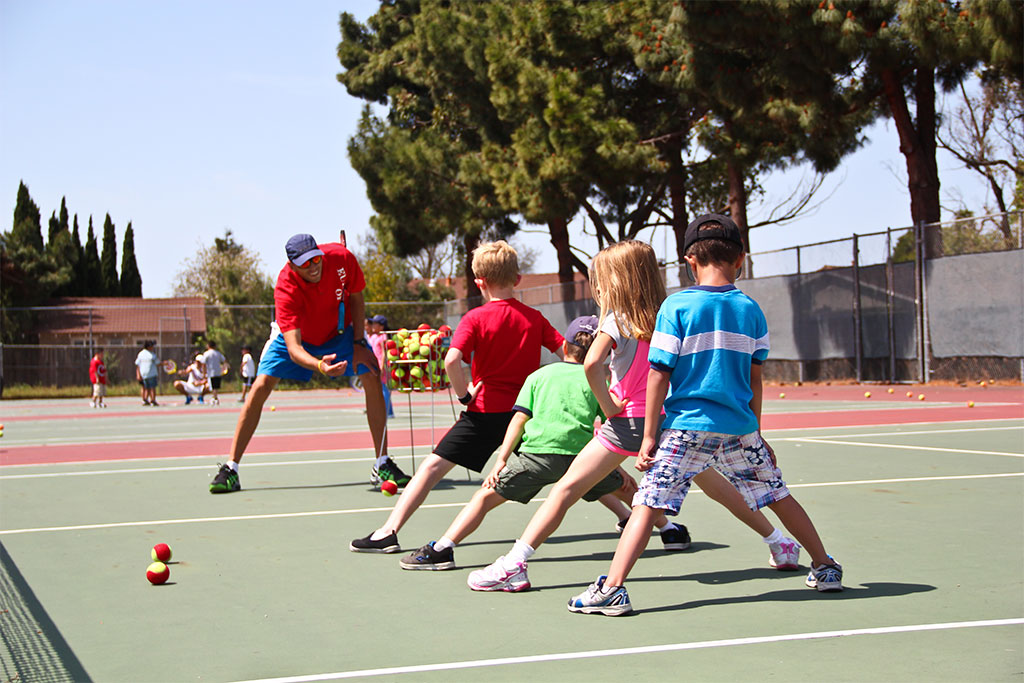
Parents and coaches can turn these five skills into a fun practice session:
Warm-up: 5–10 minutes of dynamic movement and light hitting.
Footwork: 10 minutes of lateral movement and recovery drills.
Groundstrokes: 15 minutes of controlled forehands and backhands.
Serving: 10 minutes of ball toss, technique, and placement practice.
Mental skills: Use a pre-point routine during short practice games.
Sportsmanship: Finish with a friendly match and encourage players to congratulate each other.
The session doesn’t need to be lengthy. It needs to be purposeful.
From Watching the US Open to Becoming a Better Player
The US Open provides young tennis players with an incredible source of inspiration. It showcases elite movement, precision, strategy, concentration, and competitive spirit.
But these qualities aren’t reserved for professionals.
Young athletes can develop them at their own level.
Practice better footwork. Build consistent groundstrokes. Develop a reliable serve. Strengthen mental focus. Learn to compete respectfully.
Most importantly, keep tennis enjoyable.
A young player doesn’t need a professional-level serve or highlight-reel forehand to benefit from the sport. Every practice session is an opportunity to improve one small part of the game.
The next time a child watches the US Open, encourage them to watch with curiosity.
Don’t just ask, “Who won?”
Ask, “What did you notice, and what would you like to practice?”
That simple question can turn professional tennis into inspiration, inspiration into practice, and practice into progress.