Finding the right junior tennis academy in the Bay Area can feel like a match of its own. With programs available across the East Bay, Peninsula, South Bay, and San Francisco, parents have many options to consider. The challenge is finding a program that matches your child’s age, skill level, goals, schedule, and personality.
The right junior tennis program should help children develop their tennis skills while keeping practices structured, positive, and age-appropriate. Whether your child is picking up a racket for the first time or already competing in tournaments, knowing what to look for can make the search much easier.
Here are six important factors to consider when choosing a Bay Area tennis academy for kids in 2026.
1. Start With Your Child’s Tennis Goals
Before searching for a junior tennis academy, think about what you want your child to gain from tennis.
For a beginner, the main goals may be learning basic strokes, coordination, movement, and confidence. A recreational player may simply want a weekly activity that combines exercise, skill development, and fun. An experienced junior may be looking for more advanced training, match play, tournament preparation, or individualized coaching.
Your child’s goals may also change over time. A young player who starts tennis because friends are participating may eventually develop an interest in competition. Choosing a program with multiple levels and a clear development pathway can make that transition easier.
Ask yourself:
- Is the goal fun and recreation?
- Does my child need to build fundamental skills?
- Are fitness and coordination important goals?
- Is my child interested in competitive tennis?
- Could my child eventually want tournament training?
Understanding these priorities will help you narrow down your options and find a junior tennis program in the Bay Area that fits your family.
2. Look for the Right Age and Skill Pathway
Junior tennis is not one-size-fits-all. Children learn differently depending on their age, experience, physical development, and current tennis ability.
Many youth tennis programs offer different stages of development, such as beginner classes, red-ball or orange-ball programs, intermediate training, and advanced or tournament-focused groups. These levels allow children to develop progressively rather than being placed in a class that is too difficult or too easy.
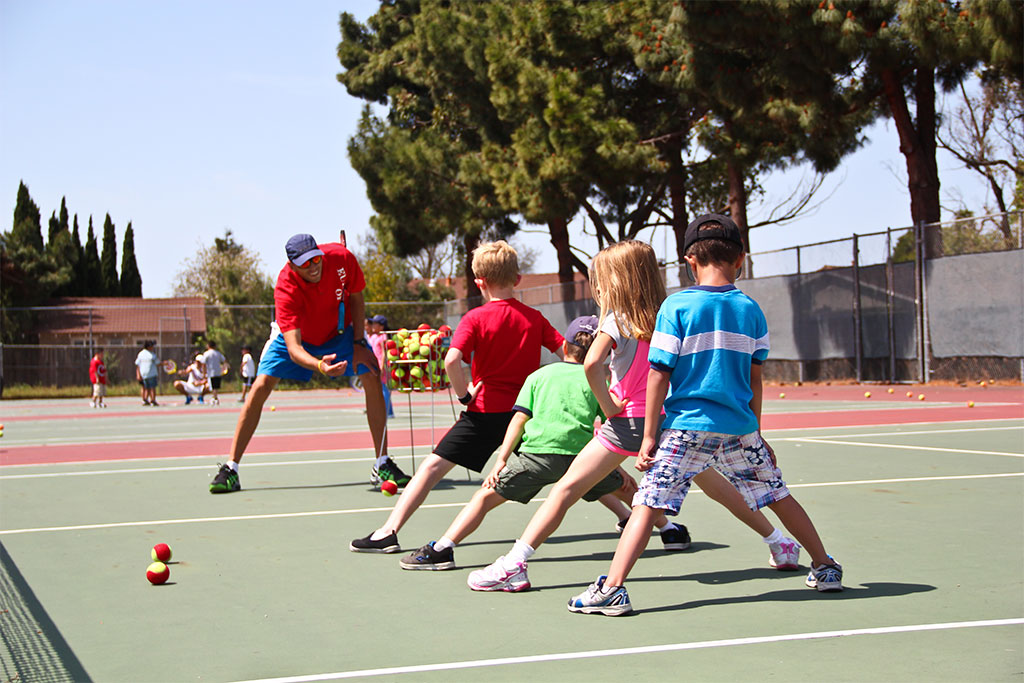
For younger players, modified courts and lower-compression tennis balls can make learning easier and help children develop proper technique and confidence. As players become more experienced, they can progress toward full-court training, point play, and more advanced competition.
When comparing Bay Area tennis academies, ask how players advance from one level to the next. Find out whether coaches regularly evaluate players and recommend the appropriate class as their skills improve.
A clear pathway can help keep young players challenged without making tennis unnecessarily frustrating.
3. Compare Coaching, Class Size, and Training Style
The coach can have a major influence on a child’s tennis experience.
Look for coaches who communicate clearly, demonstrate skills effectively, and create an environment where children feel comfortable learning and making mistakes. Tennis requires repetition and correction, so young players need encouragement while still receiving constructive feedback.
Class size is another factor to consider. Smaller groups may allow coaches to provide more individual attention and technical feedback. Larger groups can provide opportunities for rallies, games, and interaction with other players. Neither format is automatically better. The key is whether the class structure matches your child’s age, experience, and learning needs.
It is also helpful to understand the academy’s training philosophy.
Some programs focus primarily on fundamentals and recreational development. Others place more emphasis on competitive tennis, match strategy, and tournament preparation. For a child who is still discovering whether tennis is enjoyable, a highly competitive environment may not be necessary.
A good kids tennis academy should provide appropriate challenges while helping children stay engaged and motivated.
4. Consider Location, Schedule, and Cost
Location can make a significant difference for Bay Area families. Traffic and travel time can turn a convenient weekly tennis class into a difficult commitment.
Start by searching within a realistic driving distance from your home, school, or workplace. Depending on where you live, you might consider junior tennis programs in Fremont, Newark, Menlo Park, Atherton, San Mateo, San Francisco, San Jose, and surrounding communities.
Next, look closely at the schedule. Consider whether practices fit around school, homework, family responsibilities, and other activities. Consistency is important for skill development, so choosing a class your child can attend regularly is often more practical than selecting a program that requires a difficult commute.
Cost should also be evaluated beyond the advertised tuition.
Ask whether there are additional registration fees, equipment costs, uniforms, memberships, evaluations, tournament expenses, or other charges. Compare the total expected cost with the number of classes, training hours, coaching support, and other services included.
A clear understanding of the full cost can help you make a more informed decision.
5. Check Competitive Opportunities and Player Development
If your child is interested in competitive tennis, ask what opportunities are available beyond regular weekly classes.
Depending on the program, a junior tennis academy may offer supervised match play, practice matches, junior tournaments, team tennis, evaluation sessions, or performance-focused training.
USTA Northern California also provides Junior Team Tennis opportunities for players ages 7–18, giving young athletes opportunities to compete as part of a team.
Competition can help players develop skills that are difficult to reproduce through drills alone. Match play teaches young athletes how to manage pressure, construct points, adjust tactics, respond to mistakes, and demonstrate good sportsmanship.
However, competition does not need to start immediately. Younger players can build confidence through games, point-based drills, and practice matches before entering formal tournaments.
The goal should be steady development rather than unnecessary pressure.
6. Visit, Ask Questions, and Find the Right Fit
After creating a shortlist of potential junior tennis academies in the Bay Area, contact the programs directly.
Ask whether they offer an evaluation, trial class, or placement recommendation. Find out how coaches determine player levels, how often players are reassessed, and what happens when a child is ready to move into a more advanced group.
Parents can also ask practical questions such as:
- What is the coach-to-player ratio?
- How much match play is included?
- Are make-up classes available?
- What equipment should beginners bring?
- Are private or semi-private lessons available?
- Is there a pathway into competitive training?
- How are players moved between skill levels?
If possible, watch a class before enrolling. Observe how coaches interact with the players. Are children active throughout most of the session? Do coaches provide clear and useful feedback? Is the class organized? Do players appear engaged?
The right program should provide structure and meaningful instruction while still creating an environment where children look forward to coming back.
Final Thoughts
Finding the right junior tennis academy in the Bay Area in 2026 is less about choosing the most impressive-looking program and more about finding the right match for your child.
Start by identifying your child’s goals. Then compare age and skill pathways, coaching styles, class sizes, locations, schedules, and total costs. If your child is interested in competitive tennis, look into match play, tournaments, team opportunities, and long-term player development.
Most importantly, remember that junior tennis is a long-term journey. Children develop at different speeds, and their interests can change as they grow. A recreational player today may become a competitive player later, while another child may simply discover a sport they enjoy for years.
The best kids tennis program in the Bay Area is one that gives your child room to learn, improve, build confidence, and explore competition when they are ready. With the right combination of coaching, structure, encouragement, and consistency, tennis can become more than an after-school activity—it can be a positive part of a child’s development for years to come.