What the US Open Can Teach Young Tennis Players About Confidence, Focus, and Sportsmanship
Every year, tennis fans across the country turn their attention to New York for the US Open, one of the biggest events on the professional tennis calendar. The tournament is known for thrilling rallies, dramatic comebacks, packed stadiums, and unforgettable performances.
For young tennis players, however, the US Open can offer lessons that go far beyond the final score.
Watching professional athletes compete under pressure provides an opportunity to learn about tennis confidence, mental focus, resilience, and sportsmanship. Young players may not compete on the same stage, but they can practice many of the same mental habits during lessons, practices, and matches.
The US Open is more than a tournament. It is a showcase of what preparation, perseverance, and a strong mindset can accomplish.
What Can Young Tennis Players Learn From the US Open?
Professional tennis makes one thing clear: talent alone is not enough.
Players at the highest level spend years developing their strokes, footwork, fitness, strategy, and mental skills. They also learn how to handle pressure, mistakes, momentum shifts, and unexpected challenges.
For young athletes, this offers an important lesson: improvement comes from preparation and consistency.
A child doesn’t need to win every match to make progress. Learning how to prepare, compete, and respond to challenges is already a meaningful achievement.
1. Confidence Comes From Preparation
Confidence is one of the most important skills a young tennis player can develop. But confidence does not mean believing you will win every match.
True tennis confidence comes from trusting your preparation.
Practice Builds Trust
When children repeatedly practice their serves, groundstrokes, volleys, footwork, and returns, they become more familiar with their abilities.
That familiarity creates confidence.
Instead of thinking, “I hope I can do this,” a player can think, “I’ve practiced this, so I’m ready to try.”
Professional players demonstrate this principle every time they step onto the court. Their confidence is supported by thousands of hours of preparation.
Young players can adopt the same mindset at a level appropriate for their age.
Don’t Let One Mistake Take Over
Even professional tennis players miss easy shots.
A serve goes into the net. A forehand lands long. A player makes an unforced error at an important moment.
What matters is what happens next.
Young athletes can learn to treat mistakes as individual moments rather than evidence that they are not good players. One missed shot does not determine the rest of a match.
A useful mindset is simple: the previous point is over; focus on the next one.
2. Focus on One Point at a Time
Tennis requires continuous concentration. Players have only a short amount of time between points to recover mentally and prepare for what comes next.
For young tennis players, learning how to stay focused can be just as important as learning how to hit the ball.
Focus on What You Can Control
Children cannot control every shot their opponent hits.
They can control their effort, attitude, preparation, movement, and response to mistakes.
Teaching young players to focus on controllable factors can reduce unnecessary pressure. Instead of worrying about winning the entire match, they can concentrate on returning the next serve, moving their feet, or playing one point with intention.
Develop a Pre-Point Routine
A simple tennis pre-point routine can help children reset their minds.
They might take a deep breath, bounce the ball a few times, visualize the upcoming serve, and then begin.
The routine doesn’t need to be complicated.
Its purpose is to create a mental reset between points. Over time, this can help young athletes stay composed when matches become challenging.
Learn to Reset After Distractions
Crowds, noise, weather, nerves, and unexpected calls can affect concentration.
Young players should understand that losing focus occasionally is normal. The important skill is learning how to return to the present moment.
Take a breath. Reset. Play the next point.
That simple sequence can become a powerful competitive habit.
3. Sportsmanship Matters as Much as Winning
Tennis is a competitive sport, but competition should always include respect.
The US Open provides countless examples of athletes competing fiercely while still respecting opponents, officials, and the game itself.
Respect Opponents and Officials
Good tennis sportsmanship means following the rules, treating opponents respectfully, and accepting calls without unnecessary arguments.
Young players should understand that sportsmanship matters most when emotions are high.
It is easy to be gracious after winning comfortably. The real test comes after a close loss or a frustrating call.
Celebrate With Humility
Winning is exciting, and children should absolutely be allowed to celebrate their accomplishments.
At the same time, celebrations should not embarrass or disrespect an opponent.
A handshake, a “good match,” or a simple thank-you can demonstrate maturity and respect.
Winning well is a skill, too.
Learn From Losing
Losing can be disappointing, especially for young athletes who care deeply about their performance.
But a loss can also provide valuable information.
What worked? What needs more practice? What could be handled differently next time?
When children learn to view losses as learning experiences, they become more resilient competitors.
4. Resilience Helps Young Players Improve
Professional tennis matches often include momentum swings. A player may lose several games and then fight back. A strong start can suddenly disappear.
These moments demonstrate the importance of resilience.
Young players can learn that struggling during a match doesn’t mean they should give up.
Embrace Challenges
A stronger opponent can provide an opportunity to learn.
A difficult match can reveal areas that need improvement. A challenging skill can encourage a player to practice with greater purpose.
Instead of avoiding difficult situations, children can gradually learn to approach them with curiosity.
Keep Improving After Setbacks
Progress in tennis is rarely linear.
There may be weeks when a player’s serve improves dramatically and other periods when progress feels slower.
That’s normal.
Consistent practice, patience, and encouragement help children continue developing even when improvement isn’t immediately visible.
5. Turn US Open Lessons Into Everyday Tennis Habits
Watching professional tennis is exciting, but the real value comes from applying these lessons during everyday practice.
Young players can set simple goals that focus on development rather than winning.
For example:
- Improve first-serve consistency.
- Move the feet before every shot.
- Stay positive after mistakes.
- Use a pre-point routine.
- Encourage teammates.
- Respect opponents and officials.
- Focus on effort instead of the final score.
These goals are realistic, measurable, and within a player’s control.
Creating a Positive Youth Tennis Experience
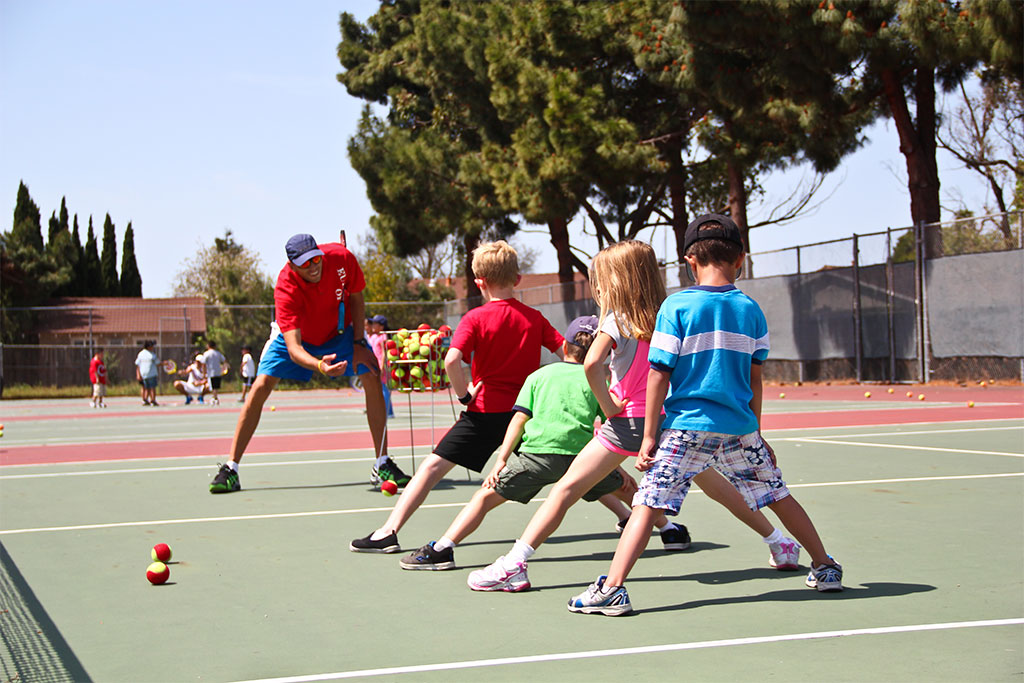
A supportive youth tennis program can help children develop both technical and mental skills.
Coaches can teach proper fundamentals while encouraging confidence, patience, effort, and sportsmanship. Children should feel comfortable making mistakes because mistakes are an essential part of learning.
The best tennis environment isn’t necessarily the one with the most trophies.
It is the one where children feel motivated to keep learning.
What the US Open Can Teach Young Tennis Players
The US Open may feature the world’s best tennis players, but its most valuable lessons can apply to athletes of every age.
Prepare with purpose.
Trust your skills.
Focus on one point at a time.
Learn from mistakes.
Respect your opponent.
Keep going when the match gets difficult.
Young tennis players don’t need to compete like professionals to learn from them. They can simply observe the habits that help elite athletes perform under pressure and adapt those principles to their own level.
The most meaningful victory may not be a tournament title.
It might be a child who walks onto the court despite feeling nervous, stays focused after making a mistake, congratulates an opponent after a tough match, or keeps practicing a skill that once seemed impossible.
Those moments build more than better tennis players.
They help create confident, focused, resilient, and respectful young athletes—qualities that can serve children both on the tennis court and throughout life.